
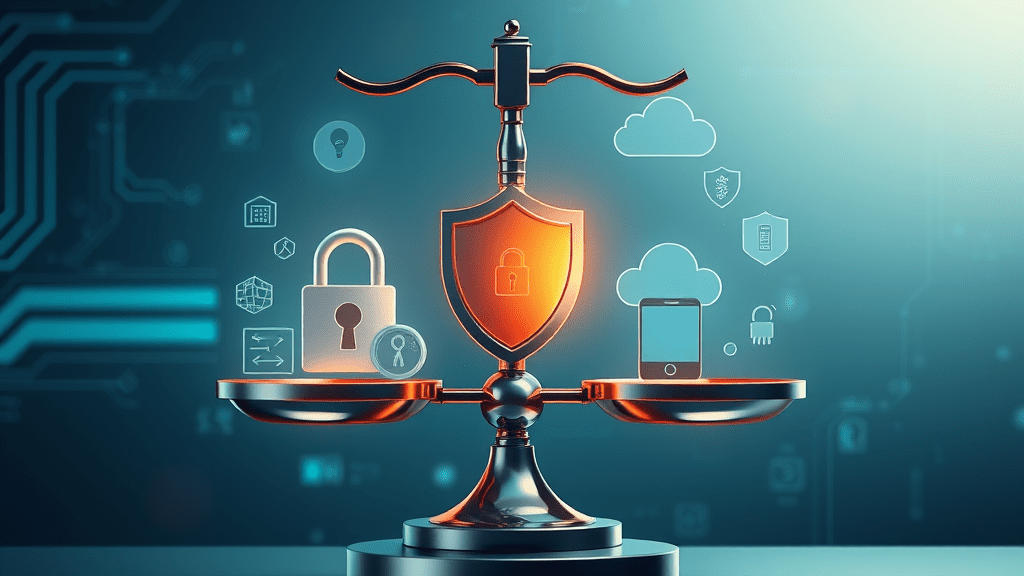
Understanding the Core Difference Between Security and Convenience 🧠
A secure IT environment prioritizes protection, control, and risk reduction, while a convenient IT environment emphasizes speed, accessibility, and ease of use. In many businesses, these two goals are often seen as opposing forces. Security introduces rules, restrictions, and verification steps, whereas convenience aims to remove friction from daily workflows. The conflict arises when organizations attempt to maximize convenience without fully considering security implications—or enforce security so strictly that productivity suffers. Understanding the fundamental difference helps leaders design IT environments that balance usability with protection instead of choosing one at the expense of the other.
Why Convenience Is So Attractive to Businesses ⚡
Convenience-driven IT environments are appealing because they allow employees to work faster and with fewer interruptions. Easy logins, shared access, broad permissions, and simple file sharing reduce friction and allow teams to collaborate quickly. From a business perspective, convenience boosts productivity in the short term and creates a smoother user experience. Employees are more satisfied when systems are easy to use, and onboarding new staff becomes faster. However, too much convenience often comes at a hidden cost, opening doors to data misuse, accidental leaks, and unauthorized access. Convenience without boundaries can quietly erode security over time.
The Role of Security in Protecting Business Assets 🔐
A secure IT environment exists to protect what matters most—data, systems, intellectual property, and customer trust. Security controls such as multi‑factor authentication, role‑based access, encryption, monitoring, and strict policies reduce the risk of cyber attacks and human error. While these measures may feel inconvenient at times, they act as safeguards against costly incidents like data breaches, ransomware attacks, and compliance violations. Security does not exist to slow work down; it exists to ensure the business can continue operating safely without disruption or loss. Without strong security, convenience quickly becomes a liability.
How Over‑Convenience Creates Hidden Vulnerabilities 🕳️
When IT systems are designed purely for ease of use, vulnerabilities multiply. Shared passwords, unrestricted access to sensitive files, personal device usage, and unsecured cloud tools often creep in unnoticed. Employees may bypass security steps to “get work done faster,” unintentionally creating entry points for attackers. These small shortcuts accumulate into major weaknesses that cybercriminal actively exploit. Over‑convenience makes it harder to track accountability, manage permissions, and enforce consistent security standards. What feels efficient today can become the root cause of tomorrow’s data breach or system outage.
Security Friction and Its Impact on Productivity 🧩
Security measures can introduce friction—additional logins, approval processes, and access limitations—that frustrate users if implemented poorly. When employees don’t understand why controls exist, security may feel like an obstacle rather than protection. This can lead to resistance, workarounds, or risky behavior. The challenge is not removing security, but designing it intelligently. User‑friendly security solutions such as single sign‑on, adaptive authentication, and automated access controls reduce friction while maintaining protection. When security is integrated thoughtfully, productivity and protection can coexist instead of competing.
Finding the Balance Between Secure and Convenient Systems ⚖️
The best IT environments do not choose security over convenience or vice versa—they balance both strategically. This means allowing easy access where risk is low and enforcing stricter controls where data is sensitive. Role‑based access ensures employees see only what they need. Automation handles routine security tasks without user involvement. Continuous monitoring detects threats without interrupting work. Clear policies educate employees so security becomes a shared responsibility rather than an enforced restriction. Balance transforms security from a barrier into a business enabler.
Why Long‑Term Success Requires Secure Convenience 🚀
In the long run, businesses thrive when their IT environments are both secure and efficient. Secure systems protect reputation, compliance, and trust, while convenient systems support productivity and innovation. Organizations that invest in smart security design avoid constant firefighting, downtime, and costly breaches. They also empower employees with tools that are safe, reliable, and easy to use. Secure convenience is not a compromise—it is a strategic advantage that supports scalability, resilience, and sustainable growth in a digitally driven world.

